
Roof Insurance Claims in Levittown: How Replacement Coverage Really Works
Insurance covers sudden damage — not old age. Understanding that distinction, and documenting damage correctly, is the difference between an approved replacement and a denial.
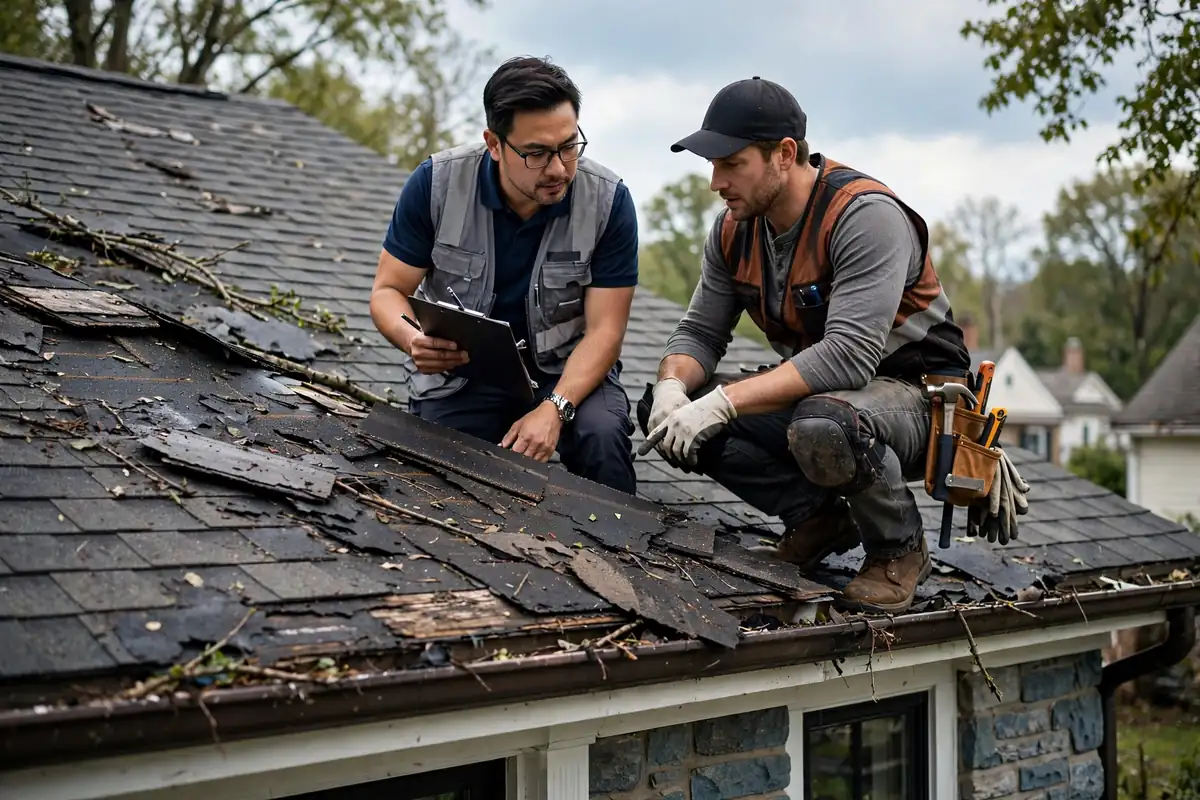
What insurance actually covers
Homeowners policies cover sudden, accidental damage: wind, hail, fallen trees, fire. They do not cover wear, age, neglect, or pre-existing issues. A 28-year-old roof leaking from age is maintenance; the same roof with wind-torn shingles after a storm is a claim.
The documentation that gets claims approved
Adjusters approve what they can verify. Our claim documentation includes dated photos of every slope, hail-hit counts per test square, wind-damage mapping, and collateral damage (gutters, vents, siding). This is the evidence package that turns 'maybe' into 'approved.'
ACV vs. replacement cost policies
Actual cash value policies pay the depreciated value of your old roof — often far less than replacement cost. Replacement cost policies pay the full replacement minus your deductible, usually in two checks (ACV first, recoverable depreciation after completion). Know which you have before you file.
The adjuster meeting: why your contractor should attend
We meet adjusters on the roof with our documentation in hand. Items commonly missed in initial settlements — ridge caps, starter course, flashing, drip edge, code upgrades — get added through supplements with photo evidence. This step routinely adds thousands to approved settlements.
When insurance pays for your roof
Homeowners insurance covers sudden, accidental damage from named perils — wind, hail, fallen trees, fire — not wear, age, or neglect. The distinction matters enormously on 70-year-old Levittown roofs: a nor’easter peeling shingles off a 22-year-old roof is a covered wind claim; shingles curling from 25 years of sun are not. Our documentation separates storm evidence (creased shingles, hail hits on soft metals, wind-pattern lifting) from wear, so the adjuster sees a clean, credible case.
The claim sequence that gets approved
Stabilize and document first (tarping if water is entering), file promptly with the documentation attached, meet the adjuster on the roof with our scope in hand, then supplement for the code-required items the first scope missed. Our insurance claim replacement page details each step. The single biggest claim-killer is delay: every rainstorm between damage and reporting spreads interior damage and muddies causation. If the storm hit your street, the free inspection now protects both the roof and the claim.
Depreciation, deductibles, and supplements
Most policies pay actual cash value first (replacement cost minus depreciation for the roof’s age), then release the recoverable depreciation when the work completes — which is why the contractor’s final invoice matters. Your deductible is your share, period. And the adjuster’s first scope routinely omits code-required items (ice-and-water shield, drip edge, ventilation corrections); our evidenced storm damage supplements recover them. You should never pay out of pocket beyond the deductible for the approved scope — if a contractor asks, get a second opinion.
Related Services
Areas We Serve
Holly Hill
Roof replacement in Holly Hill, Levittown.
Indian Creek
Roof replacement in Indian Creek, Levittown.
More Guides
How Much Does Roof Replacement Cost in Levittown?
Guide from Roof Replacement Authority.
7 Signs Your Levittown Home Needs a Roof Replacement
Guide from Roof Replacement Authority.
Frequently Asked Questions
Should I file a claim before knowing if there is damage?
No. Get a professional inspection first. Filing a claim that results in zero payout can still count as claim activity on your record.
How long does the claims process take?
Simple approvals: two to six weeks. Disputed or supplemented claims: two to four months. We keep the process moving with prompt documentation at every step.