
7 Signs Your Levittown Home Needs a Roof Replacement
Most roofs do not fail overnight — they send warnings for years. Here are the seven signs Levittown homeowners should never ignore, and what each one means.
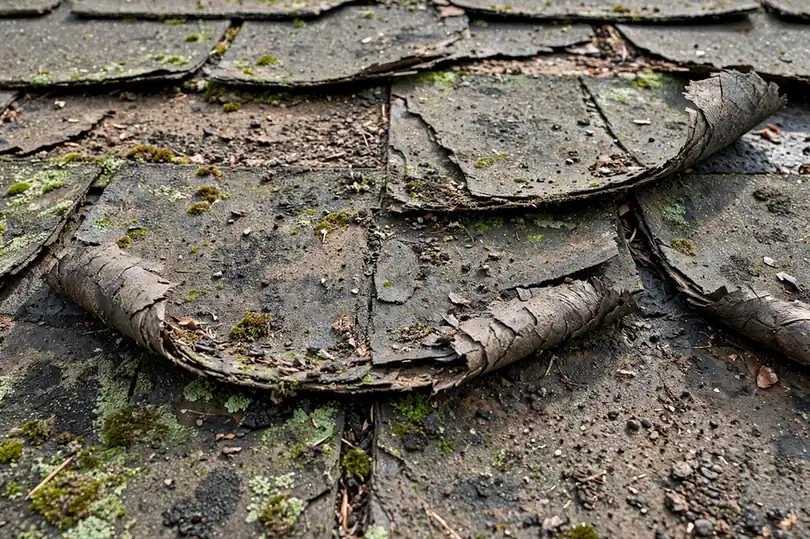
1. Curling, cupping, or clawing shingles
When shingle edges turn up or the centers bubble, the asphalt is drying out and the shingle is losing its ability to shed water. In Levittown's nor'easters, humid summers, freeze-thaw cycles, and occasional heavy snow, this aging accelerates — curled shingles are past their prime.
2. Granule loss and bald spots
Those sand-like granules protect the asphalt from UV. Check your gutters: heavy granule buildup means the shingles are thinning. Bald spots are shingles on borrowed time.
3. Cracked, missing, or wind-lifted shingles
A few missing shingles after a storm can be repaired. Widespread lifting or cracking across slopes means the fastening system is failing and replacement is the economical fix.
4. Daylight or water stains in the attic
Go into the attic on a sunny day. Pinpoints of daylight mean holes; dark staining on the deck means active or past leaks. Either way, the roofing system is compromised.
5. Sagging roof planes
A sagging deck indicates structural or sheathing damage — often from long-term moisture. This needs professional assessment promptly, not next season.
6. Moss, algae, and persistent staining
In Levittown's damp microclimates, biological growth holds moisture against the shingles and accelerates decay. Some staining is cosmetic; widespread colonization is not.
7. Age: the calendar does not lie
Three-tab shingles last 15-20 years here; architectural shingles 20-30. If your roof is past its material's expected life, start planning the replacement on your schedule instead of the roof's.
The signs you can see from the ground
Missing, cracked, or curling shingles — especially after wind events. Granule loss showing as bald spots or granules piling in gutters and at downspout exits (check after rain). Black algae streaking on north slopes — cosmetic at first, but it signals moisture retention. Sagging areas between rafters — structural, call promptly. Daylight in the attic or water stains on the underside of decking. Any one of these on a roof past year 18 deserves the free professional inspection; several together mean the roof is telling you it is done.
The signs inside the house
Ceiling stains — even small, even "old" — mean water has a path; the stain is the symptom, the roof is the disease. Peeling paint near rooflines signals moisture in the wall assembly. A sudden spike in energy bills can mean failed ventilation cooking the attic. Mold or mildew smell in the attic means moisture is living where it should not. On Levittown’s slab homes, where everything runs through the attic, interior signs often appear before exterior ones — take them seriously.
The age question (and the honest answer)
Architectural shingles last 20–30 years in Bucks County’s climate; 3-tab 15–20; if your roof is past 20 and showing any signs above, replacement planning should start now — on your schedule, not the next storm’s. But age alone is not destiny: we have seen 25-year-old roofs with life left and 16-year-old roofs destroyed by poor ventilation. The repair-vs-replace guide walks through the decision math, and our free inspection gives you the verdict with photos — (888) 974-0663. Do not wait for the ceiling to decide for you.
Related Services
Areas We Serve
Holly Hill
Roof replacement in Holly Hill, Levittown.
Indian Creek
Roof replacement in Indian Creek, Levittown.
More Guides
How Much Does Roof Replacement Cost in Levittown?
Guide from Roof Replacement Authority.
Roof Repair vs. Replacement: How Levittown Homeowners Should Decide
Guide from Roof Replacement Authority.
Frequently Asked Questions
My roof is 22 years old but looks okay. Should I replace it?
Get an inspection. Some 22-year-old roofs have five good years left; others are one storm from failure. An honest assessment beats guessing — we will tell you which one yours is.
Can I just repair the bad spots?
Spot repairs make sense when damage is truly localized and the roof is mid-life. When the warning signs are widespread, repairs become a subscription you keep paying until the inevitable replacement.